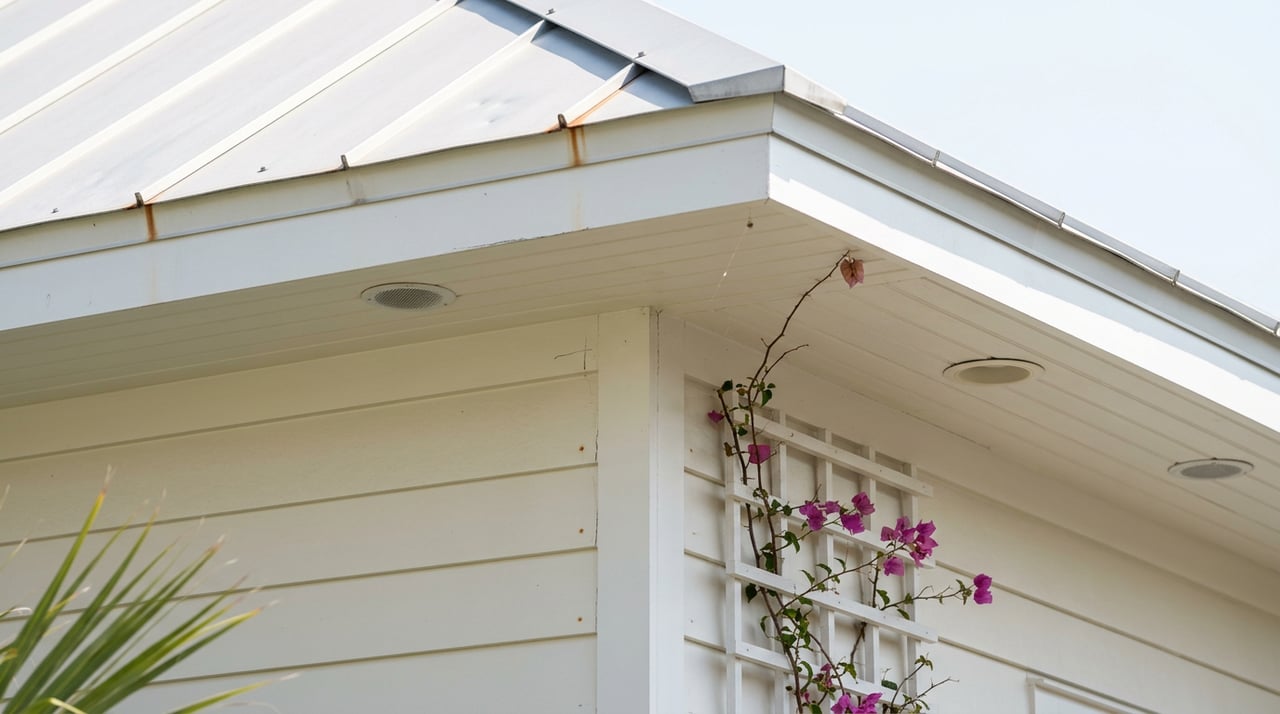
Two things are true about The Meadows in 2026. The first is that its wood-frame Conch cottages, many of them dating from 1886 to 1912, set on foundation piers about three feet above the ground with peaked metal roofs and horizontal wood siding, remain some of the most sought-after houses on the island. The second is that Florida just quietly rewrote the form that tells a buyer's insurance carrier what one of those houses is worth to insure.
If you plan to list this year, the second fact is the one that will show up in your closing timeline.
The one-paragraph version of what changed
On April 1, 2026, the Uniform Mitigation Verification Inspection Form (OIR-B1-1802) was updated after replacing a version that had been in place for over a decade. The form itself is still valid for up to five years provided no material changes are made to the structure or inaccuracies are found, and insurance companies are expected to begin applying credits under the new form in July 2026. What changed is the standard of proof. Inspectors no longer have the flexibility to rely on general observations; they must provide comprehensive documentation for every credit claimed, including specific permits, product approvals, and high-resolution photos of all mitigation features.
Why a Meadows seller carries more exposure than a New Town seller
Wind mitigation credits are not a small line item. Wind mitigation credits apply specifically to the windstorm portion of a policy, which typically makes up 30 to 50 percent of the total premium; the credits reduce that portion, not the whole bill, but in South Florida the savings are real and recurring every year. When your buyer's lender bakes an annual insurance number into a debt-to-income calculation, the difference between "full opening protection" and "no credit" can be the difference between an approval and a renegotiation.
Here is where The Meadows diverges from a 2005 CBS build on the other side of Truman:
- The housing stock is old. Common inspection findings include termite damage, aged foundations, deteriorated plumbing and electrical systems exacerbated by salt air, and roof integrity issues following years of intense sun and storm exposure.
- Permit history is often thin or missing on work done decades ago, which is precisely what the tighter 2026 standards penalize, with features that previously received full credit now receiving partial or no credit.
- Exterior hardening decisions are not the seller's alone to make. They belong, in part, to HARC.
The thesis, plainly: in The Meadows, the April form doesn't just change what an inspector writes down. It changes what a seller has to assemble before the sign goes in the yard, because the usual mid-escrow fix, "harden it and re-inspect," runs straight into a historic review calendar that will not be rushed.
Where HARC changes the math
HARC oversees the character, integrity, and appearance of the historic preservation districts, and any changes, alterations, additions, demolitions, or relocations to buildings within a historic zoning district must obtain a Certificate of Appropriateness before a building permit is issued. The Meadows sits inside that footprint. The guidelines cover essentially all exterior work, including roofs, windows, shutters, porches, excavations, pools, landscaping, and parking, which is the same list of features that generates the biggest wind mitigation credits.
Two operational realities matter to a seller working backwards from a target list date:
- HARC accepts a maximum of 10 new major projects for each monthly agenda, and any further major projects will typically be deferred to the following month.
- Approval from HARC is the first step in obtaining building permits. Without HARC approval for a job, there is no job.
Translated: if the pre-listing inspection reveals that your roof-to-wall connections cannot be verified without opening a soffit, or that your storm panels are unrated, you cannot simply order impact windows on Tuesday and re-inspect on Friday. You are looking at a Certificate of Appropriateness first, then a building permit, then the work, then a fresh inspection. That is a multi-month runway on a historic contributing structure, and it is the friction most Meadows sellers do not price into their listing calendar.
There is one meaningful lever inside those constraints. Owners in the historic district have used the state's My Safe Florida Home Program, reestablished in May 2022 within the Department of Financial Services, which provides pre-qualified, certified, and licensed inspectors to identify roofs, windows, and doors whose hardening will increase survivability in severe windstorms. One documented Old Town owner working within the same historic overlay noted the practical limit: because the house was in the historic district, roofing was restricted to an original-style material, in that case a Victorian metal shingle, so the focus of improvements shifted to windows and doors that were not hurricane rated. The same trade-off applies block by block through The Meadows.
The four documents to pull before you call an inspector
Assemble these while you still control the timeline. Every one of them makes an inspector's job faster and a buyer's insurance quote tighter.
- The roof permit and product approval. Including the permit number and application date is now critical, especially for roof replacements. Insurance companies use this to decide how much of a discount you qualify for, and missing or incomplete permit data can mean leaving money on the table. Pull the permit from the City of Key West Building Department and, if you can, the manufacturer's Florida Product Approval number for the panels or shingles used.
- Opening protection paperwork. For every impact window, impact door, or approved shutter on the property, dig up the NOA or Florida Product Approval sheet. Under the new form, an inspector's photo of a sticker is no longer a shortcut to full credit.
- Any prior HARC Certificate of Appropriateness. These sit in the city's records and confirm that the work an inspector is looking at was approved as installed. That matters because a HARC final inspection must be passed before a Certificate of Occupancy can be issued, and a buyer's title work will surface unpermitted exterior changes.
- Your last wind mitigation report, if you have one. Older reports are not automatically worthless. Reports completed before April 1, 2026 may remain valid depending on the carrier, as the inspection form is valid for up to five years unless superseded, but with the new form now active, an updated inspection may produce more favorable results if the home has undergone upgrades since the last inspection.
A pre-listing sequence that protects the deal
The order matters more than the individual steps. Run it in this sequence and the April change stops being a threat and starts being a marketing asset.
- Ninety days out, order the wind mitigation and four-point inspections. The inspection itself costs roughly $95 to $150, which is a rounding error against the premium delta it will produce for your buyer. Specialized inspections like Four-Point and Wind Mitigation are often required by insurers for older properties.
- Read the report as a buyer's lender will read it. Every "unknown" or "no credit" line is a place where documentation, not construction, may recover credit. This is the paperwork pass.
- Decide, with your agent, which items are worth a Certificate of Appropriateness before listing. A permitted opening-protection upgrade completed pre-listing gives you a clean report to hand to prospective buyers. An unpermitted one done in a hurry after the inspection contingency will not survive underwriting.
- Talk to a local carrier's underwriter, not just an agent. A quote for the seller is a rehearsal for the quote the buyer will receive. Local agencies including Diamond Insurance and Fullers Insurance operate specifically in Monroe County, and the underwriting math they run is not the math a mainland call center runs.
- Package the documentation with the listing. A pre-inspected home with a completed Florida Wind Mitigation Form 2026 and all supporting documentation is a powerful marketing tool, and in a market where buyers can compare carrying costs across a shrinking pool of eligible carriers, it is often the tiebreaker.
The neighborhood is one of the reasons your home commands what it commands. If you want the block-by-block context on why a Meadows listing behaves differently from a New Town or Casa Marina listing, our Meadows neighborhood page walks through the housing stock and street rhythm in more depth.
FAQ
If my current wind mitigation report is from 2024, do I have to re-inspect before listing? Not automatically. The prior form remains valid up to five years subject to the carrier's discretion, but a fresh inspection under the new form is often the smarter play if you have added shutters, replaced a roof, or upgraded any door or window since the report was written. It is also the smarter play if the older report has "unknown" answers in the roof-deck or roof-to-wall sections.
Will the new form make my premium go up? The form does not set premiums. It changes the evidence standard for the credits that reduce the windstorm portion of the premium. Some homes may qualify for better credits; others may see fewer, simply because the standards are stricter now. Which side of that line your house lands on depends almost entirely on documentation.
How long does a HARC Certificate of Appropriateness actually take? Plan in months, not weeks, especially if your project is a "major" one. The 10-project monthly cap is real, and the sequence of HARC approval, then building permit, then work, then re-inspection compounds. For a routine like-for-like repair, staff-level review is faster, and the Historic Preservation Planner's office can tell you which bucket your project falls into before you file.
Can I sell without doing any of this? You can. The question is what happens when your buyer's insurance quote comes back and their lender adjusts the payment upward. The seller who has a documented 2026 form in the disclosure packet controls that conversation. The seller who does not is negotiating in the dark.
Selling a historic Meadows home in 2026 rewards preparation more than it ever has. If you are thinking about a listing this season and want a candid read on what your documentation, roof, and openings actually mean for a buyer's carrying cost, Sold By Stacy will walk your house with you and build the packet before the sign goes up. Request a complimentary home valuation to start the conversation.