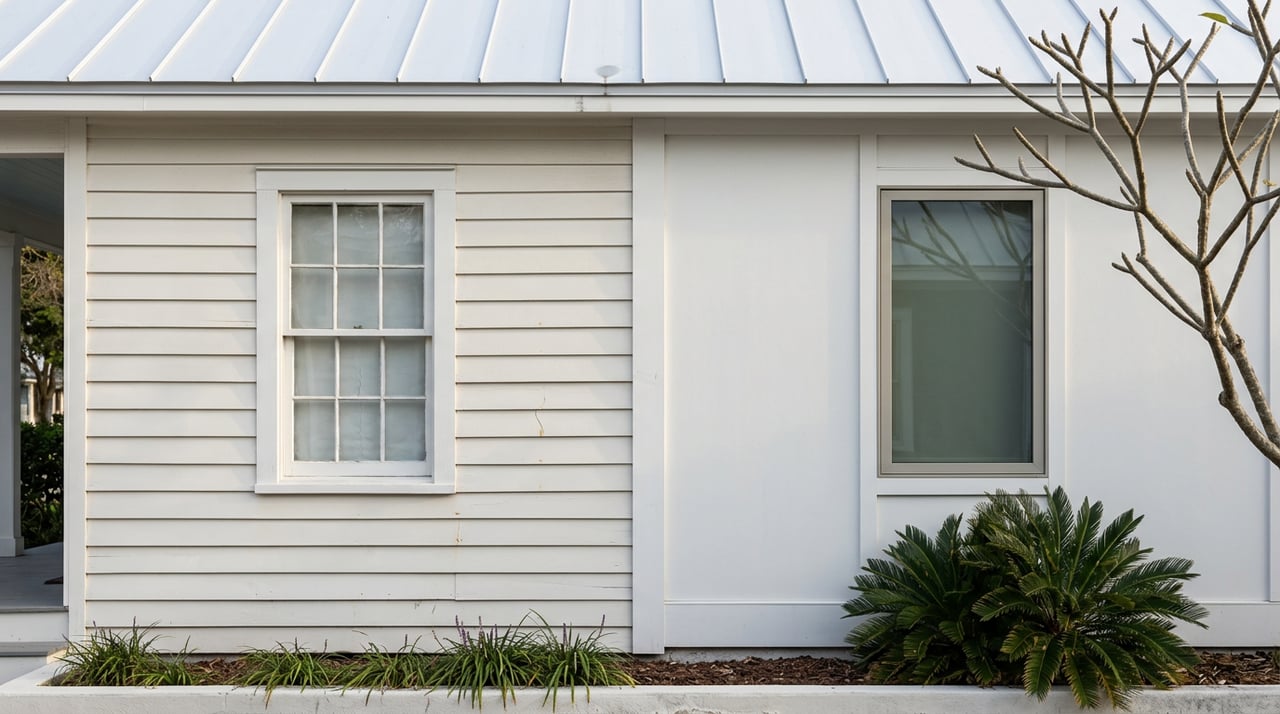
Two cottages sit two doors apart on the same lane in Old Town. Same 1930s vintage, same tin roof pitch, same modest footprint on a narrow lot. One sold in six weeks to a buyer who closed, pulled permits, and had a new rear addition framed within a season. The other sat on the market for the better part of a year, price cut twice, before a cash buyer finally took it as is.
The difference wasn't condition, and it wasn't price. It was a line on a city survey that most buyers never think to ask about: whether the house is coded "contributing" or "noncontributing" to Key West's Historic District. That single designation, filed with the city long before either house ever went on the market, decides how much say a new owner actually has over what happens to the exterior. It is arguably a bigger factor in what you can do with an Old Town property than the square footage in the listing.
The survey that outranks the listing sheet
Key West's Historic District was designated in 1971 and expanded in 1983 to cover roughly 5,400 acres running from Whitehead and White Streets to the waterfront, encompassing thousands of buildings that the city has individually classified through a Historic Structure Survey. Every structure in that survey gets sorted into one of two buckets. A contributing building adds to the historic and architectural character of the district and falls within its documented period of significance. A noncontributing building, according to the city's own guidance, does not meet that bar on its own, even if it sits on the same block and looks the part from the street.
The Historic Architectural Review Commission, known locally as HARC, is the body that enforces what that designation actually means in practice. And it means more than most buyers assume walking through an open house.
Why "historic" isn't the premium term buyers think it is
Here's the part that surprises people who fall for the picket fence first and ask questions later: contributing status is not a value marker. It's a restriction marker. Per the city's own FAQ on historic preservation, the regulations for alterations and additions to contributing buildings are firmer than those for noncontributing ones. A noncontributing structure, even one built decades ago, generally gives an owner more room to add, reconfigure, or modernize the exterior without triggering the same level of review.
That reverses an assumption a lot of buyers carry into Old Town: that "historic" and "valuable to renovate" are the same thing. Sometimes the more flexible, more renovation-friendly property in a bidding comparison is the one the survey quietly labeled noncontributing, not the picturesque conch cottage everyone is competing over.
And the rules apply more broadly than most buyers expect. Under the city's Land Development Regulations, a Certificate of Appropriateness is required for the construction, painting, or alteration of any exterior element, whether or not a building permit is even required for the work. Repainting the trim, swapping a fence style, adding solar panels that need to minimize public visibility per the guidelines, all of it runs through the same review path if the structure is inside HARC's jurisdiction.
Contributing vs. noncontributing, side by side
| What you're trying to do | Contributing structure | Noncontributing structure |
|---|---|---|
| Repaint or replace exterior materials | Certificate of Appropriateness required | Certificate of Appropriateness still required, generally more flexible standards |
| Add square footage or raise the roofline | Firmer regulations | More flexible standards |
| Elevate for flood mitigation | Cannot elevate solely to park underneath or build an addition beneath the structure | Elevation restrictions apply |
| Solar installation | Must minimize public visibility per the guidelines | Same requirement, applied with more flexibility |
That elevation rule deserves its own moment, because it's the one that actually derails renovation budgets after closing.
The elevation trap
More Old Town buyers than ever are thinking about flood mitigation as part of their purchase plan, not as an afterthought. Insurance costs have made elevation an attractive long-term move for anyone planning to hold a property for years. But HARC's guidelines are explicit here. The commission understands the value of raising a historic structure out of the floodplain, but it draws a hard line against doing so simply to create parking or living space underneath a contributing building. If your renovation plan for a contributing cottage includes "raise it and finish out the ground floor," that plan may not survive its first HARC meeting.
This is exactly the kind of detail that shows up in a contractor's estimate, not in a listing description. Kevin Melloncamp, a Key West general contractor who has worked through the HARC approval process on multiple restorations, has described the paperwork required to satisfy both HARC and the city's Building Department as genuinely disorienting for first-time renovators.
What this is doing to time on market
Across portal snapshots taken between January and June 2026, Old Town's median home price has held near $1,695,000, with homes in the neighborhood typically taking well over 100 days to sell, more than double the roughly 53-day national norm reported on the same platform. Price alone doesn't fully explain that gap. Plenty of markets carry seven-figure medians without doubling the national days-on-market figure.
Part of what's happening, in a district where the majority of structures fall under HARC review, is that serious buyers with renovation plans are building in an extra diligence loop before they'll commit: pulling the survey status, talking to a contractor about what a Certificate of Appropriateness will actually allow, sometimes scheduling a pre-application conversation with the Historic Preservation Planner before they'll write an offer contingent on that scope. HARC also caps its monthly agenda at 10 new major projects. Separately, contractors and architects who specialize in this work are often booked out, adding real weeks to any renovation-contingent purchase. None of that shows up in a listing's day-one price. It shows up in how long a motivated buyer needs before they're comfortable moving from offer to close.
Before you write an offer
- Ask whether the structure is listed as contributing or noncontributing on the city's Historic Structure Survey. This is public information, not a negotiating secret, and it should factor into your offer as much as the inspection does.
- If any exterior change is part of your plan, budget calendar time for a Certificate of Appropriateness, even for something as small as a fence or a repaint.
- If flood mitigation elevation is central to your renovation plan, confirm HARC's stance on that specific structure before making your offer contingent on that scope.
- If you're planning solar, know that panels need to minimize public visibility under current guidelines.
- Build in extra time. HARC has a monthly cap on new major project submissions. Separately, local contractors who specialize in this review process may have limited availability.
"All exterior work must have HARC approval whether or not a building permit is required." — City of Key West Historic Preservation guidelines
FAQ
Does a contributing designation always lower a home's resale value? No. Buyers who want an authentic, unaltered Old Town property often pay a premium specifically for contributing status and the character it protects. The designation matters most to buyers who are counting on significant renovation flexibility as part of their plan.
Where can I check a specific address before making an offer? Start with the city's own Map of the Historic District or reach out to the Historic Preservation Division directly. It's a five-minute check that can save months of renovation planning later.
If you're comparing Old Town properties and want a clearer read on what a specific address's HARC status actually means for your renovation plans, or you're weighing whether now is the right time to list a contributing home you already own, SoldByStacy can walk through it with you street by street. Request a complimentary home valuation and we'll factor in exactly this kind of detail, not just the comps.
This article is general information, not legal, tax or financial advice. Consult a qualified professional about your situation.