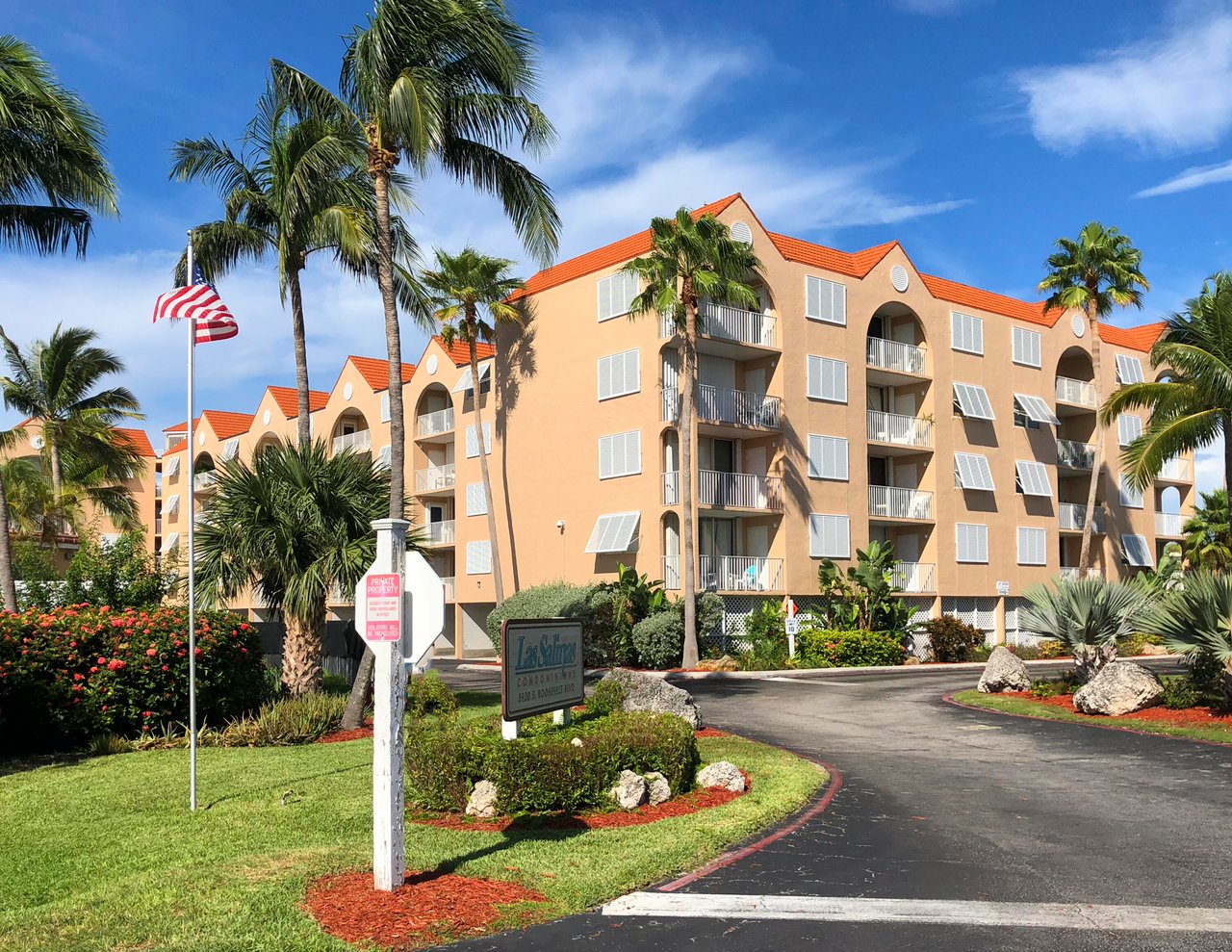
On a Wednesday evening at Sonny McCoy Indigenous Park, an 87-year-old woman walks onto a strip of red Florida clay, picks up a two-pound ball, and rolls it toward a target the size of a golf ball. She has done this on these same courts every spring and fall season since 2003, and by her own count she has never once skipped a week.
"I have never missed a week," says Coco Ono, a Key West resident since 1993 and, at 87, the oldest active player in the Southernmost Bocce League. Her team is named for its sponsor, White Street Chiropractic, and on any given night she is out there with fellow players from a roster that runs more than 500 names deep, all treating this patch of clay at White Street and Atlantic Boulevard the way other towns treat a country club.
The Postcard Two Blocks Away
Most people who photograph this stretch of the neighborhood are aiming their cameras at the Casa Marina Resort. Henry Flagler conceived the building as the endpoint of his Overseas Railroad, and it opened on New Year's Eve in 1920 with arches designed to echo the railway itself. Today the 311-room resort fronts more than 1,100 feet of the largest private beach in Key West, and it is the image most visitors carry home.
But the resort is built for people passing through. What actually anchors this end of the neighborhood, night after night for parts of four decades, sits a few blocks away and charges nothing to walk up and watch. Sonny McCoy Indigenous Park's bocce courts are open to the sky, free to enter, and running on a schedule that has barely changed since Ronald Reagan's second term.
Thirty-Nine Years on the Same Patch of Clay
The Southernmost Bocce League started in 1987 on three courts at Bayview Park. Barbara Feinberg, one of the league's founding players and the owner of Bone Island Graphics on White Street, has played every season since, through surgeries and injuries that at different points had her rolling the ball from a wheelchair or leaning on a cane. The league eventually outgrew Bayview and relocated to its current home next to Indigenous Park, where it now has seven lighted courts, each 66 feet long and 12 feet wide, built with Florida clay and wooden side frames that regular players use for calculated bank shots.
More than 500 people play across two seasons a year, spring and fall, with matches four nights a week, Monday through Thursday. Games run to 16 points, and teams carry sponsor names from local businesses the way Little League teams do. The courts themselves are kept in playing shape by longtime volunteers Kevin Adams and Joe Banfield, and the hand-painted sign marking the league's home was made by local artist Don Zangerle. None of this is dressed up for visitors. It is simply what this corner of the neighborhood has been doing on weeknights since before most of the homes around it were renovated into their current form.
What You'd Actually Find If You Walked Over
If you have never stopped at the corner of White Street and Atlantic, here is what is actually there:
- Seven lighted clay courts at Sonny McCoy Indigenous Park, directly across the street from the White Street Pier
- League play Monday through Thursday evenings during the spring and fall seasons, free to watch, $20 per person to join a team
- Higgs Beach and the smaller Rest Beach within a short walk, along with the Key West Bird Refuge next door
- One of the last stretches of free parking left on this end of the island, in the same lot that hosts birthday parties, the occasional permitted rehearsal dinner, and a Sunday artisan market
None of it requires a reservation. People show up, watch a frame or two, and often end up talking to whoever is standing at the rail. If you want the fuller rundown of how this stretch of coastline splits between the quiet Reynolds Street side and the more event-driven White Street side, we covered that divide in an earlier piece on the two beaches behind Casa Marina.
The One Weekend It Gets Loud
For fifty-one weeks a year the league is a quiet, mostly local affair. The exception is the Barefoot Bocce Tournament, which started almost by accident. Barefoot Radio owner Kevin Redding and Stars of Hope vice president Johnny Crane were standing in the parking lot one Fourth of July, waiting for the fireworks, when the idea came up to run a tournament right there. It has happened every year since.
Entry fees are split between the winning team's prize and Monroe County Stars of Hope, a charity formed after Hurricane Irma to support the families of first responders, with a smaller share going toward maintaining the courts themselves. For one weekend, the low-key evening ritual becomes a public event with a cause attached, and then it goes back to being what it always is: a handful of teams, a set of clay lanes, and people who have been showing up long enough to know each other's throwing style by heart.
What the Courts Say About the Neighborhood
The resort down the street tells you what Casa Marina looks like from the road. The bocce courts tell you how it actually runs. A neighborhood where an 87-year-old has a standing Wednesday commitment, where a business owner has played through canes and wheelchairs rather than sit out a season, and where the same volunteers have kept the clay in shape for years without much fanfare is a neighborhood held together by routine, not by amenities.
That kind of continuity does not show up in a listing photo, but it is part of what makes this stretch of Key West worth understanding before you ever think about a For Sale sign. If you are curious what a home in this rhythm is actually worth on paper, SoldByStacy offers a complimentary home valuation, no pressure, no obligation, just a clear read on where things stand.